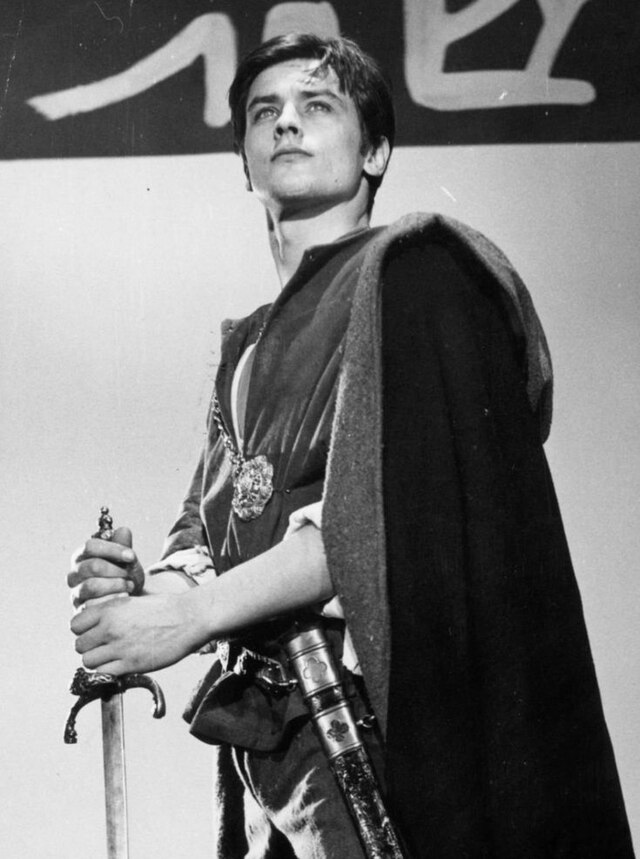


The elegance of restraint
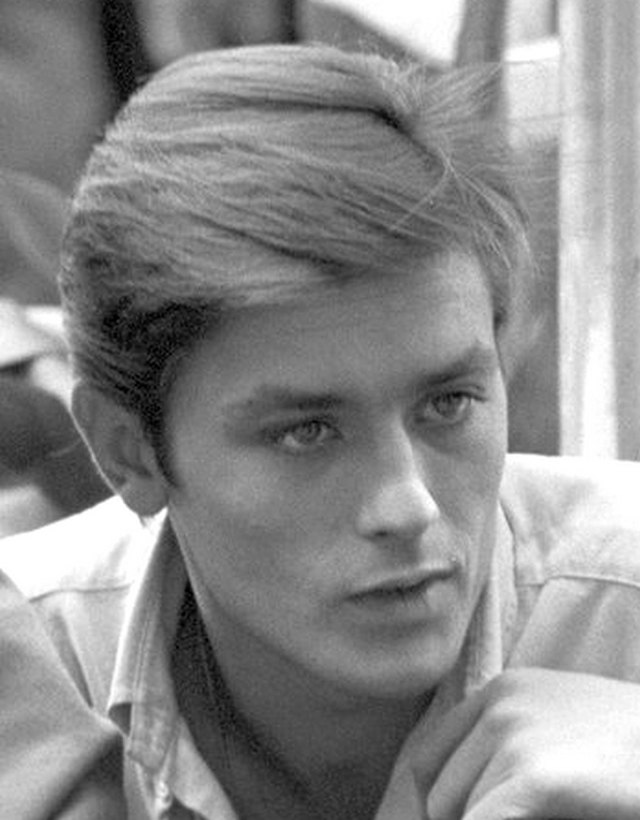
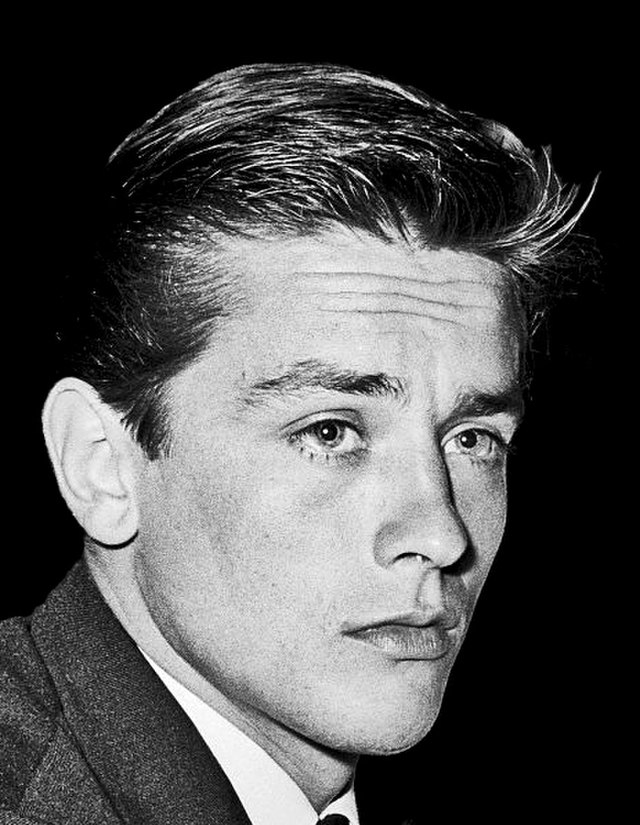
Alain Delon was not merely an actor of French cinema: he was an aesthetic. A way of being in the world. An idea of masculinity founded on measure, control, and distance. His beauty — often described as legendary — was never complacent. He did not seek the gaze; he sustained it. He did not ask for attention; he imposed it naturally.
In European cinema of the 1960s and 1970s, Delon embodied a rare kind of presence: silent, almost motionless, yet magnetic. In films such as Le Samouraï or Purple Noon, words were reduced to a minimum. It was the gaze that built the character. It was the restrained gesture that defined the tension. His elegance did not arise from display, but from subtraction.
And it is precisely this distance that still makes him a cultural reference today.
Beauty as inner discipline
Alain Delon’s beauty was not merely physical. It was discipline. It was emotional control. It was awareness of his own impact. In an era where charisma is often confused with excess, Delon represented the opposite: the strength of restraint.
Under the direction of Jean-Pierre Melville, his figure transforms into an archetype. The protagonist of Le Samouraï does not raise his voice, does not expose himself unnecessarily, does not seek empathy. His masculinity is built on silence and self-control. Distance becomes a form of style, and style becomes language.
Within that restraint lies a contemporary lesson: true elegance does not need to explain itself.
Alain Delon’s style: rigor and simplicity
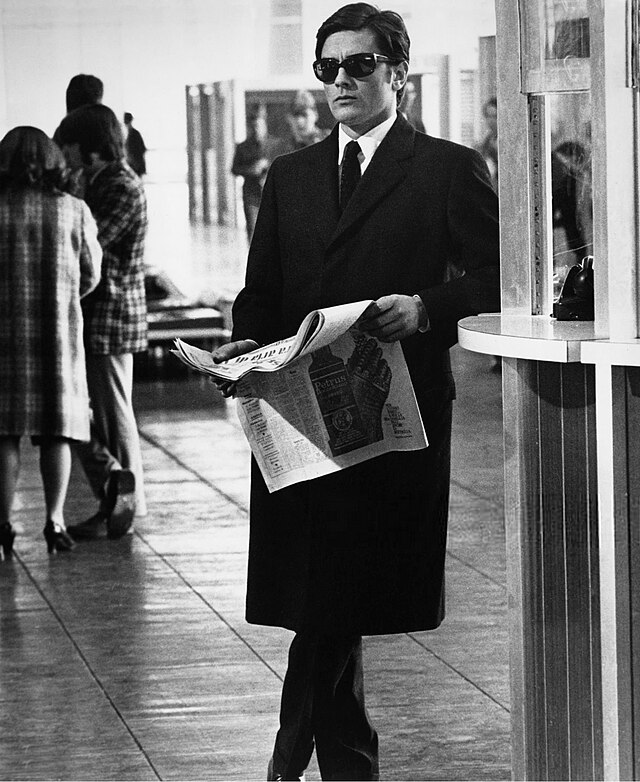
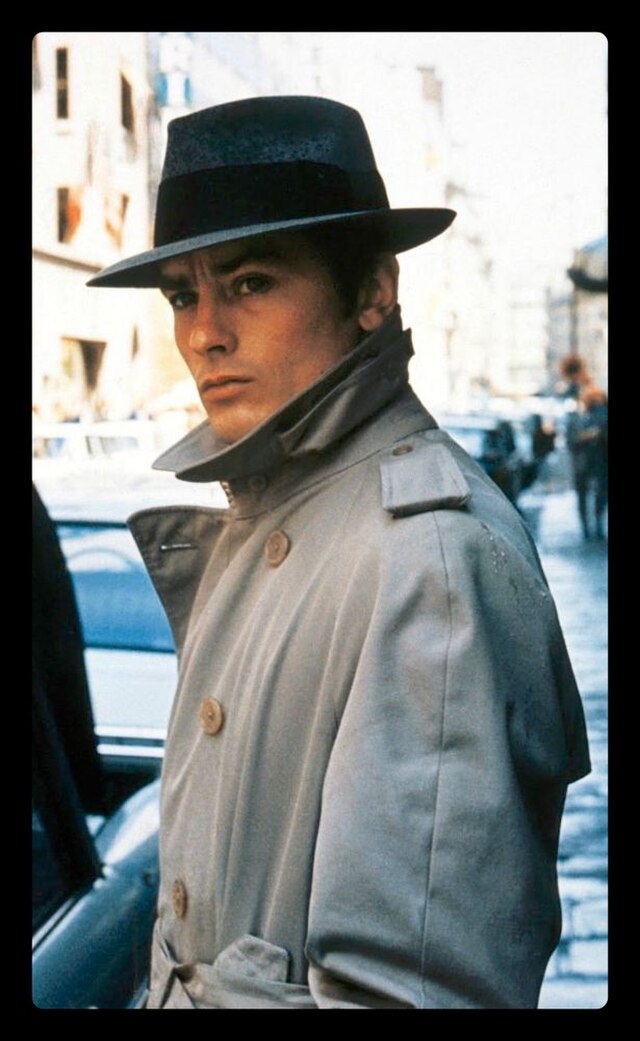
When speaking of Alain Delon, one cannot ignore his style. It was not flamboyant, not decorative. It was precise. Clean lines, impeccable suits, structured coats, white shirts without excess. Even in his toughest roles, elegance remained intact.
His masculine style was coherent with his presence: no superstructures, no unnecessary ornament. A trench coat, a dark suit, an essential watch were enough to construct a complete image. Clothing did not serve to stand out, but to confirm an identity.
In this sense, Alain Delon defined an idea of masculine elegance that still inspires today: less noise, more structure. Less fashion, more style.
Distance as language
Alain Delon’s distance was not a snobbish attitude. It was a narrative and personal choice. In an era when celebrity was already spectacle, he maintained a zone of shadow. He did not grant himself completely. He did not over-explain.
This control of his image contributed to strengthening his myth. Because what is not entirely revealed retains power. Distance thus becomes an integral part of fascination.
Today, in the era of hyper-exposure, this posture appears almost revolutionary.
What we can learn today from Alain Delon
Alain Delon’s lesson is surprisingly current. In a world dominated by constant visibility, we can learn the value of measure. We can learn that elegance is born from control, not from excess.
We can learn that beauty is not merely aesthetic, but an inner posture. That style is not accumulation, but selection. That distance is not coldness, but strength.
Alain Delon reminds us that not everything must be shown in order to be understood. And that choosing what not to display is an act of maturity.
In summary: Alain Delon’s legacy
Alain Delon’s legacy goes beyond cinema. It is cultural. It is stylistic. It is symbolic. He embodied a form of masculinity that was elegant, controlled, distant yet present.
In a time that rewards immediacy, his figure continues to represent balance. Not out of nostalgia, but out of coherence. Not for imitation, but for inspiration.
Alain Delon demonstrated that true presence does not arise from noise, but from control. And that distance, when conscious, becomes style.