



When design meets culture and becomes a symbol
There are objects that transcend time without ever losing their meaning. They do more than serve a function: they become symbols. The automobile is one of them. It has never been just a means of transportation, but an extension of identity, a reflection of its historical context, a silent language capable of expressing who we are without words.
Every era has had its own shapes, materials, and ambitions. Inevitably, it has also had its own car. Lines, engines, proportions—everything contributes to building an image that goes far beyond the road. When a car manages to embody the spirit of its time, it stops being a product and becomes an icon.
What it really means to define an era
Not every car, no matter how beautiful or powerful, manages to leave a mark. Defining an era is not about popularity or price. It is about representing change, capturing a collective desire, becoming the symbol of a way of living.
It is a balance between innovation and identity. Between engineering and imagination. A car that defines an era is one that remains recognizable beyond its time, one that continues to speak even after decades have passed. It no longer belongs only to its owner, but to a shared cultural memory.
The cars that shaped their time
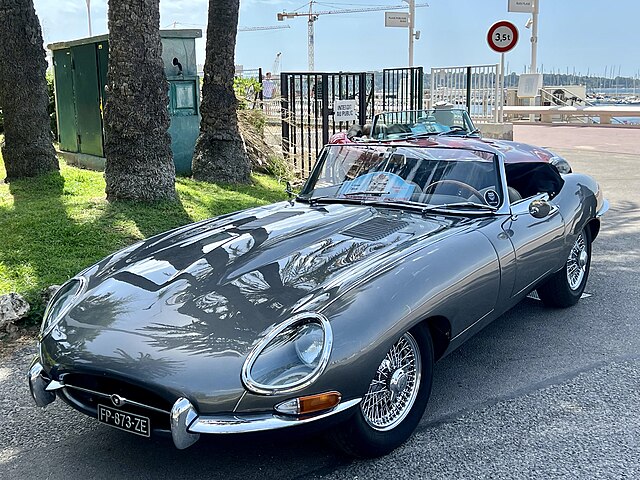
In the 1960s, elegance takes form in the Jaguar E-Type. With its long, sensual lines, it perfectly blends performance and refinement. It is not just a car—it is the image of a sophisticated Europe, still rooted in aristocratic ideals yet ready to embrace modernity.
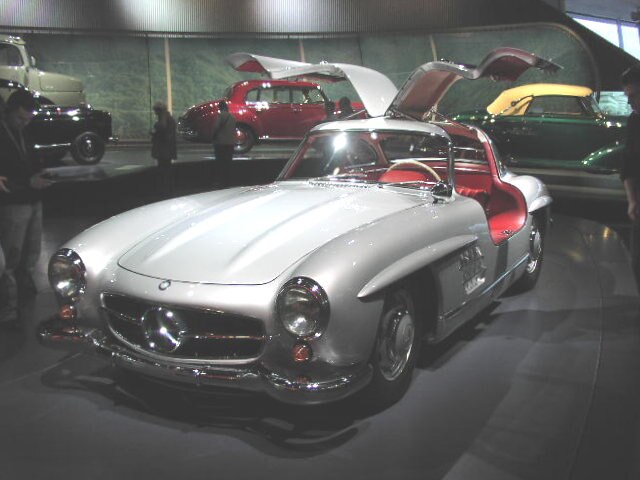
In the post-war era, the Mercedes-Benz 300SL introduces a new language. Its gullwing doors are not merely a technical solution, but an aesthetic statement that breaks from the past. It represents rebirth, ingenuity, and the return of possibility.
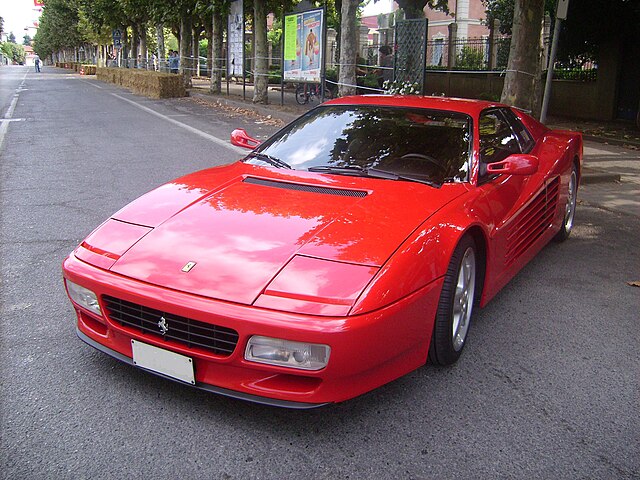
The 1980s find their purest expression in the Ferrari Testarossa. Sharp lines, bold air intakes, a commanding presence. It is the era of excess, of personal affirmation, of luxury that does not ask for permission. The Testarossa does not just attract desire—it demands attention.
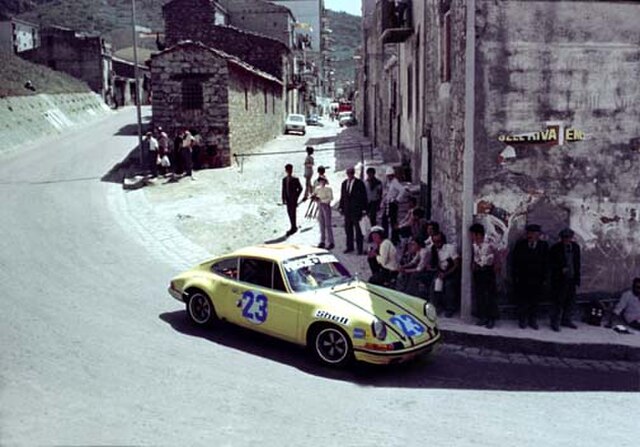
Consistency and identity are embodied by the Porsche 911. Rather than defining a single moment, it transcends eras without losing its essence. It proves that evolution, when guided by a clear vision, does not require revolution.
Finally, with the Range Rover, the concept of luxury shifts entirely. No longer confined to the road or the city, it moves seamlessly across environments without losing prestige. It marks the beginning of a more versatile, contemporary, and fluid idea of elegance.
From engineering to lifestyle
Looking at these cars, a clear thread emerges: the transition from a purely mechanical object to a cultural experience. The automobile is no longer just something to drive, but something to live.
Luxury evolves, adapts, transforms. From a symbol of exclusivity, it becomes an expression of personality. Shapes change, but what remains is the ability to tell an era through seemingly simple details: a curve, a grille, a proportion.
In this sense, the cars that defined an era are not just relics of the past, but keys to understanding the present.
Today: are there still cars capable of defining an era?
In a world dominated by technology, mass production, and increasingly uniform design, it is fair to ask whether cars can still leave such a deep mark.
The answer may not be immediate. Change today is faster, more fragmented. And yet, precisely for this reason, identity becomes even more valuable. The cars that will stand out will not necessarily be the most powerful or the most expensive, but those capable of expressing something authentic.
Because, in the end, defining an era is not about numbers. It is about vision.


1 comment
Comments are closed.