

A suspended time between ritual and spectacle
Carnival is not merely a celebration. It is suspended time. A moment in which order loosens, hierarchies soften, and society grants itself a symbolic reversal. Behind the masks, among confetti and music, lies a centuries-old history intertwined with religion, politics, identity, and culture.
To understand the meaning of Carnival is to move beyond spectacle and rediscover its deeper function: a collective ritual of transformation and representation.
The origin of Carnival: etymology and the liturgical calendar
The word “Carnival” is traditionally linked to two interpretations: carne vale (“farewell to meat”) or carnem levare (“to remove meat”). Both refer to the same reality: the period preceding Lent in the Christian liturgical calendar, a season of fasting and penance.
Carnival emerges as a transitional space between excess and abstinence. Before the austerity of Lent, the community allows itself abundance, noise, and controlled transgression.
Its roots, however, also reach into pre-Christian traditions. End-of-winter festivals, agrarian rites, and seasonal celebrations had already established a “different” time, separated from ordinary life. Medieval Christianity did not eliminate these customs; it reorganized and institutionalized them.
Carnival thus became a liminal time: a symbolic boundary between order and chaos.
The social function: a world turned upside down
One of Carnival’s defining features is the reversal of roles. For a few days, social hierarchies are suspended. Authority can be mocked, power imitated, conventions inverted.
This inversion is not pure anarchy but ritualized critique. Society exaggerates its own contradictions and stages them publicly. In doing so, Carnival performs a balancing function: tension is released before order is restored.
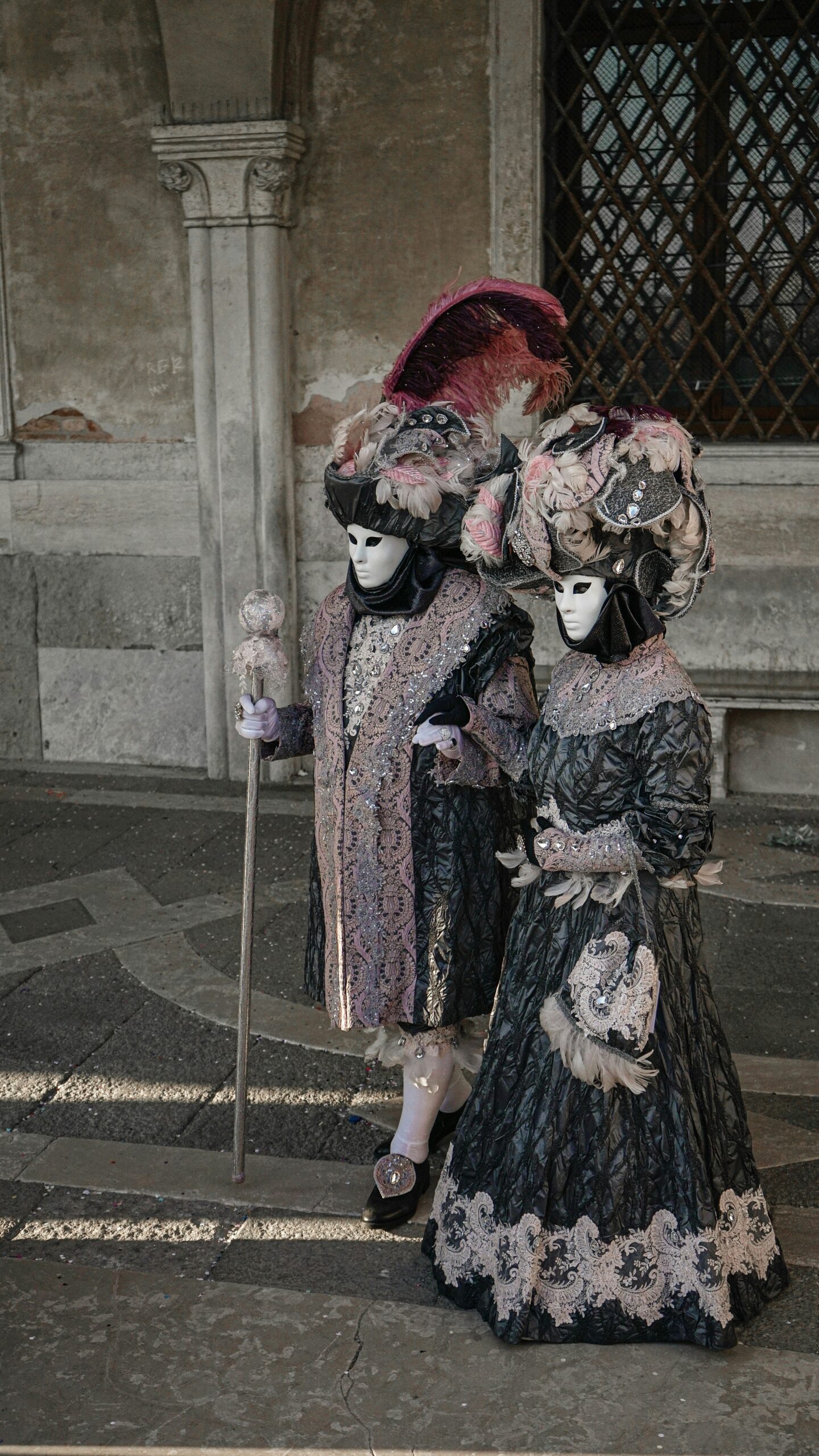
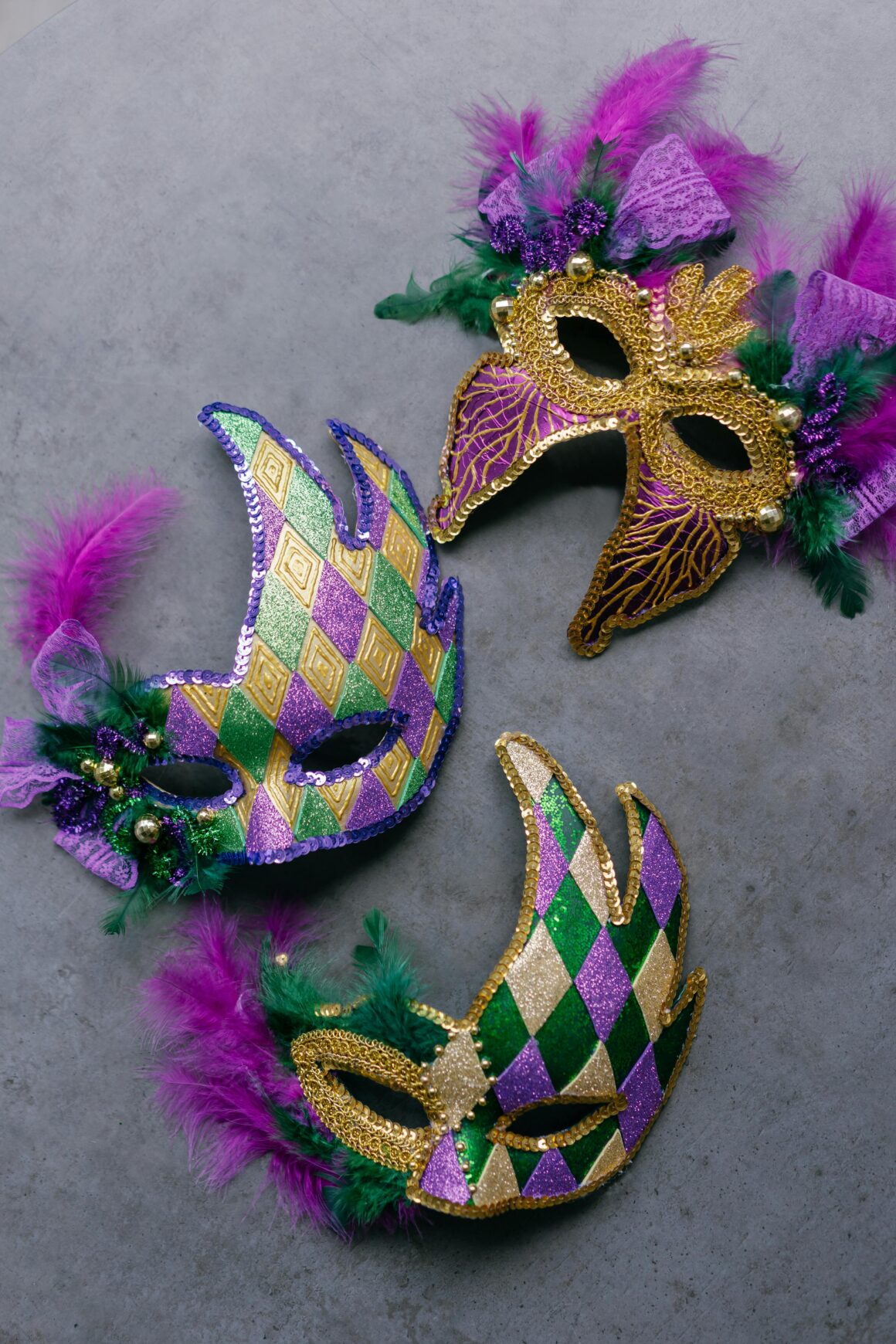
The mask stands at the center of this dynamic. By covering the face, individuals temporarily free themselves from social identity. Anonymity allows experimentation with alternative roles and identities.
Yet the mask is not merely concealment. It is revelation. It suggests that identity itself contains elements of performance. Carnival becomes an implicit reflection on the constructed nature of social roles.
Great Carnivals: tradition and spectacle
Across time, Carnival has assumed different forms shaped by local culture.
In Ivrea, the Battle of the Oranges symbolically reenacts a popular revolt against tyranny. Conflict becomes collective ritual and historical memory transformed into performance.
In Viareggio, monumental papier-mâché floats express sophisticated political satire and social commentary. Carnival becomes public art and ironic reflection on contemporary issues.
In Rio de Janeiro, parades and samba transform the celebration into an explosion of rhythm, body, and cultural belonging. Here Carnival embodies identity through movement and sound.
In Nice, the Battle of Flowers reflects a Mediterranean elegance, combining spectacle with refined visual celebration.
Different expressions, yet the same symbolic structure: suspension, representation, community.
The Carnival of Venice: history and aristocratic theatricality
The case of the Carnival of Venice deserves particular attention for its historical depth.
The first documented reference dates back to 1094, in an official act of Doge Vitale Falier mentioning public entertainments and using the term “Carnival.” This record demonstrates institutional recognition and highlights the festival’s significance in the civic life of the Republic.
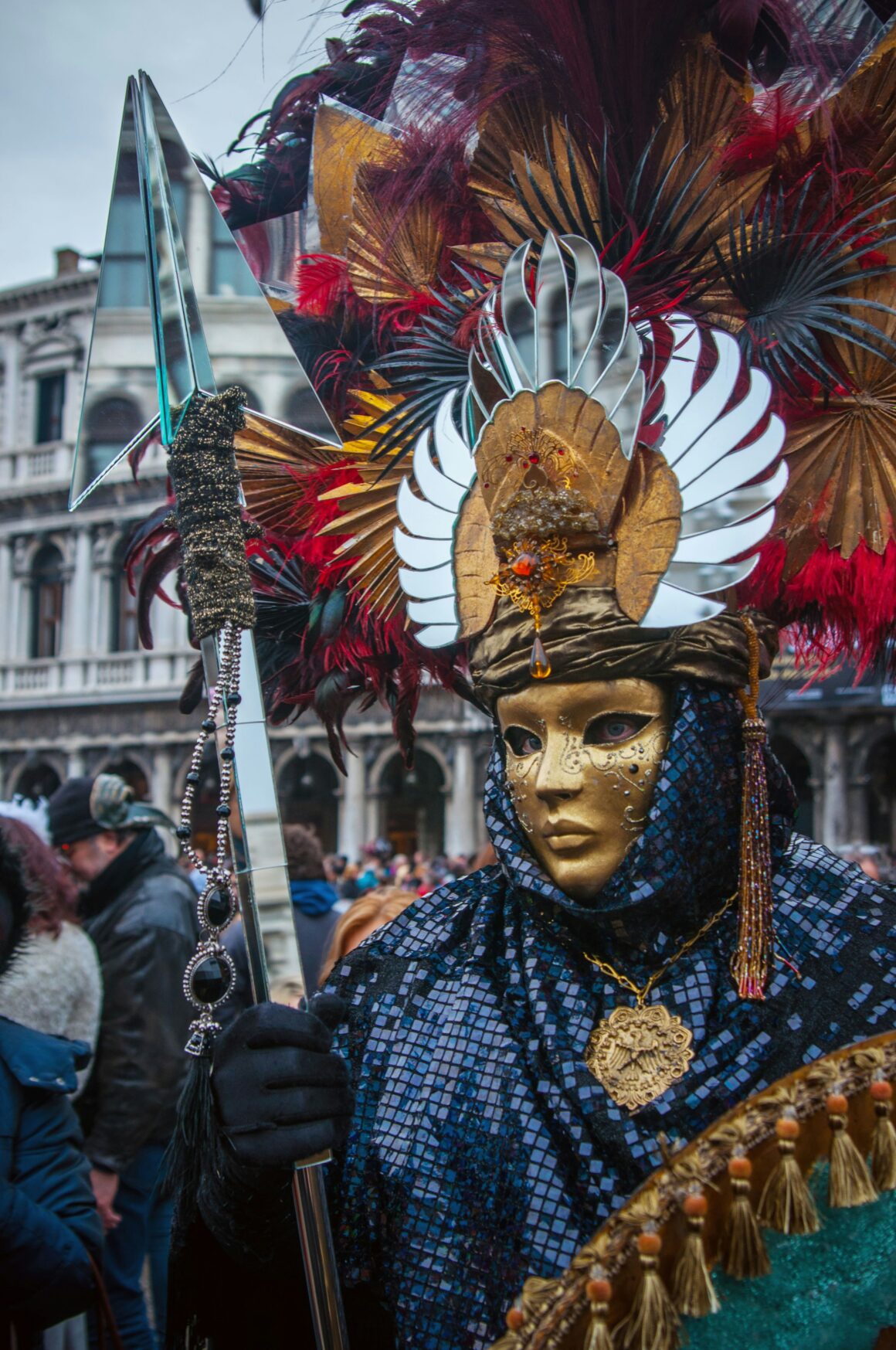
Over time, the Venetian Carnival became integral to the culture of the Serenissima. It could last for months, transforming the city into a grand theatrical stage. Masks allowed anonymity not only to common citizens but also to aristocrats, facilitating social mobility, discreet encounters, and subtle political maneuvering.
Venice elevated Carnival into an art form. Refinement, splendor, and aristocratic theatricality intertwined in a delicate balance between freedom and control. The city itself became performance — anticipating modern concerns about identity and representation.
The Venetian Carnival was not merely festivity; it was a cultural and political device.
Carnival today: ritual or spectacle?
Today, Carnival often appears as a global cultural event, shaped by tourism and media. Its ritual dimension sometimes seems overshadowed by spectacle.
Yet something essential remains. Whenever a community gathers to mask itself, to mock power, to suspend norms, an ancient structure reemerges.
The question is not whether Carnival remains authentic, but whether contemporary society still needs suspended time. Perhaps it does. Behind every mask lies a simple truth: identity is never fixed; it is partly representation.
Carnival reminds us that social order exists — but can be staged. And sometimes, to understand who we are, we must first wear another face.